
Introduction to CSR
Business in India previously had one simple goal. That goal was to make a profit. However, the landscape has completely changed today. Indian consumers are smarter now. Moreover, employees demand more from their employers. They are asking a new, tough question: What does your company stand for? Consequently, this is where Corporate Social Responsibility (CSR) comes in. In India, CSR is no longer just a PR tactic. On the contrary, it is a vital strategy. Furthermore, it works hand-in-hand with strong corporate governance. Recent data shows a major shift. In fact, a majority of Indian consumers prefer brands that support a good cause. Similarly, employees care too. Young professionals want to work for companies that give back to the nation. In this guide, we will explain what CSR is. Additionally, we will look at why it boosts your bottom line in the Indian market.
What is Corporate Social Responsibility (CSR)?
Simply put, Corporate Social Responsibility is a business model. It helps a company be socially accountable. Specifically, this accountability applies to the company itself. It also extends to stakeholders and the public. Through this, companies measure their impact on society. This includes economic, social, and environmental impact.
The Indian Context: The 2% Rule
Notably, India is unique globally. It was the first country to make CSR mandatory by law. Under Section 135 of the Companies Act, 2013, profitable companies must spend at least 2% of their average net profit on CSR. As a result, this moved CSR from the "back room" to the boardroom. You can read the official text of the Act here.
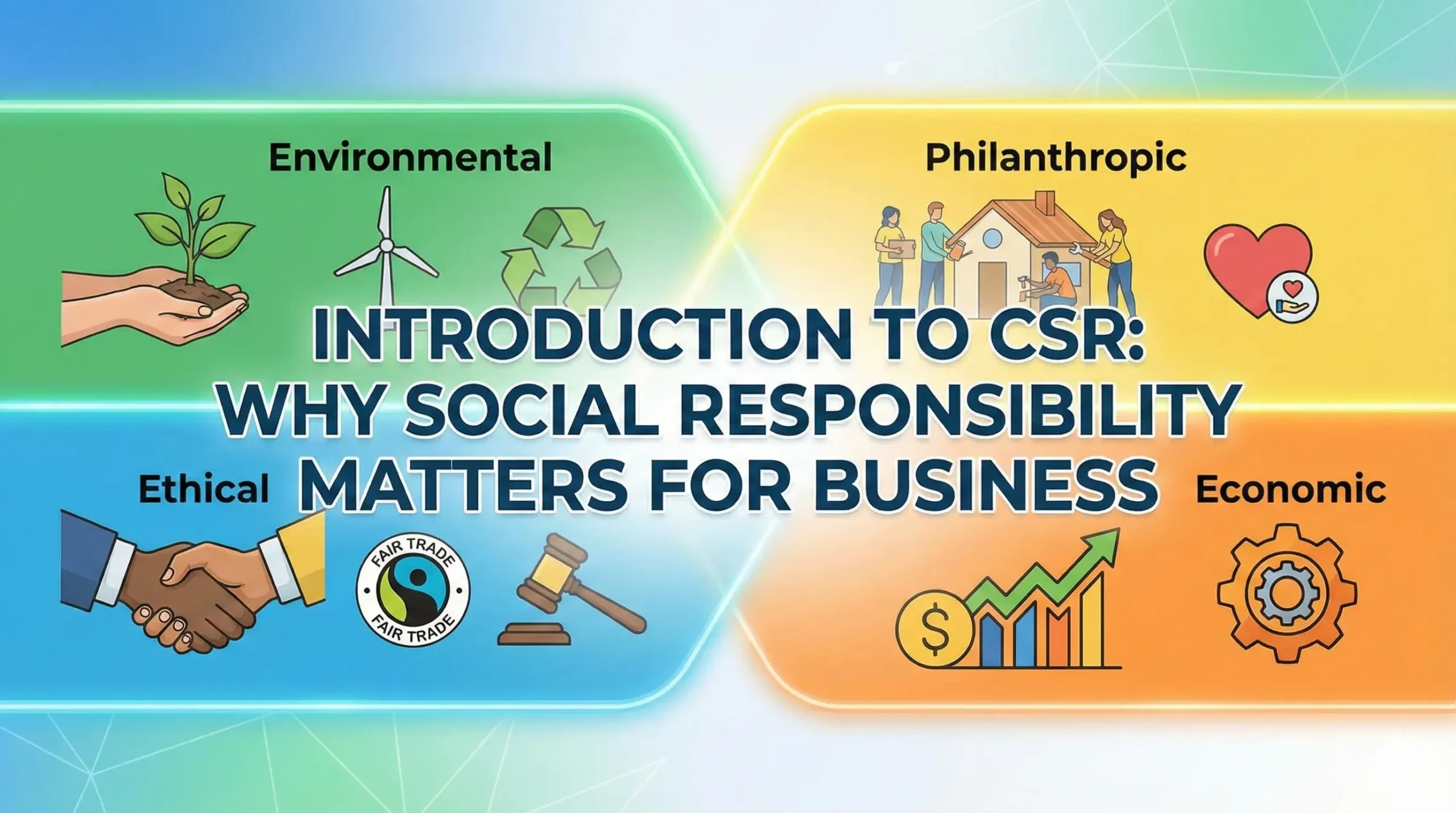
The 4 Pillars of Corporate Social Responsibility
A good strategy covers four main areas. These are often called the "pillars." Interestingly, they align closely with the 4 pillars of corporate governance.
1. Environmental Responsibility
First, there is environmental responsibility. This focuses on the planet. Companies try to reduce their carbon footprint and waste.
- Actions: Water harvesting, planting trees, or using solar power.
- Example: An IT park in Bengaluru switching to 100% renewable energy.
2. Ethical Responsibility
Secondly, we have ethical responsibility. This ensures a company plays fair. Therefore, it means treating people with respect across the supply chain.
- Actions: Paying fair wages to contract workers. Also, ensuring safe working conditions in factories.
3. Philanthropic Responsibility
Thirdly, companies must consider philanthropic responsibility. This pillar is about giving back. Companies use their wealth to help society.
- Actions: Donating to the PM Cares Fund. Alternatively, building schools in rural villages or sponsoring local health camps.
4. Economic Responsibility
Finally, there is economic responsibility. This pillar ties everything together. It means the company backs its words with money.
- Actions: Investing in sustainable packaging, even if plastic is cheaper. Likewise, supporting local MSME vendors.
The Business Case: Why CSR Matters in 2025
Some people think CSR is just a tax. However, they are wrong. It actually drives profit. Here is why it helps you compete in India.
1. Attracting Top Talent
India has a young workforce. Millennials and Gen Z constitute a large part of it. Importantly, they want purpose, not just a salary. The Benefit: Companies with strong values attract the best IIT and IIM graduates. Consequently, it reduces attrition rates significantly.
2. Building Brand Trust
Trust is currency in India. Consumers stay loyal to brands that help the community. The Benefit: A strong reputation protects you during a crisis. Moreover, it builds a connection that discounts cannot replicate.
3. Investor Confidence
Investors are careful today. They look at ESG (Environmental, Social, and Governance) scores. Therefore, a strong CSR record shows you are a safe bet.
Real-World Indian Examples
Tata Group: The Gold Standard
Considerthe Tata Group. They are synonymous with trust. In fact, about 66% of the equity of Tata Sons is held by philanthropic trusts.
- The Impact: From cancer hospitals to scholarships, they support national development. You can explore their CSR philosophy here.
Mahindra & Mahindra: Project Nanhi Kali
Similarly, Mahindra focuses heavily on education. Their flagship project, Nanhi Kali, supports the education of underprivileged girls.
- The Lesson: Focusing on a single, powerful social issue can define your brand identity. Visit the Nanhi Kali website to see their impact.
ITC: e-Choupal
Likewise, ITC created a digital network for farmers. It helps them check prices and sell crops directly.
- The Lesson: CSR can be part of your business model. This initiative helped farmers and improved ITC's supply chain. Learn more about ITC e-Choupal here.
How to Start Your CSR Strategy
Fortunately, you do not need to be Reliance or Infosys to start. Small changes make a difference.
- Identify Local Needs: To begin with, look at the community around your office. Do they need clean water? Do they need books?
- Set Clear Goals: Next, be specific. Say "we will fund 50 scholarships this year."
- Involve Employees: Then, create a team to lead the way. Indians love to volunteer.
- Be Transparent: Finally, share your results. Use social media to tell your story.
Conclusion
To sum up, Corporate Social Responsibility is not just about compliance. It is about nation-building. As India moves towards 2025, business is changing. Thus, the companies that thrive will be the responsible ones. Remember, profit and purpose are partners. Start today. Look at your community. Also, talk to your team. Build a business that matters.