
Introduction of India-EU FTA
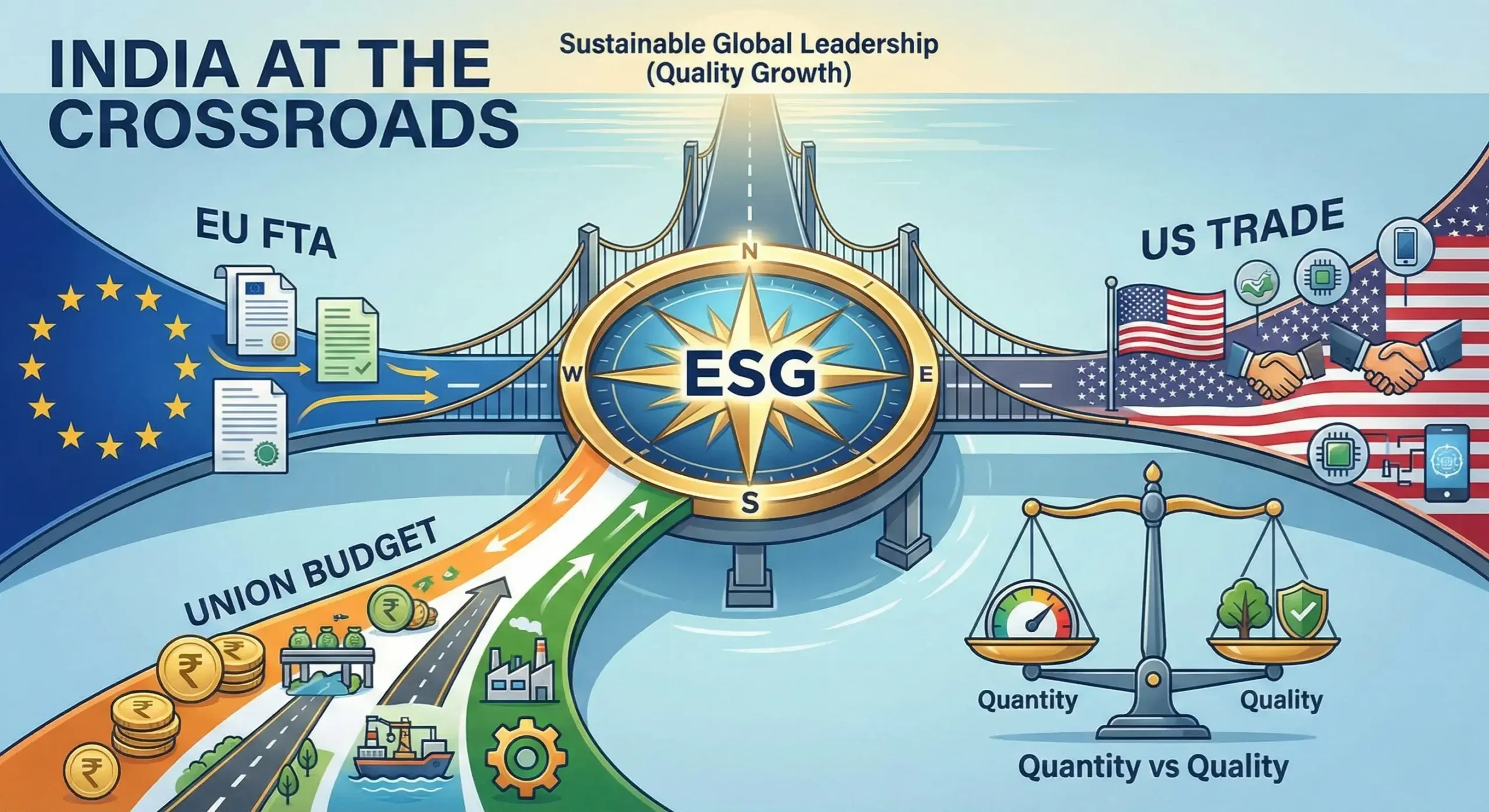
The newly concluded trade agreement is being hailed as the "Mother of All Deals," but for corporate leaders, the real story lies in the shift in India-EU FTA governance. Beyond tariff cuts, this pact represents a fundamental reset in how Indian companies must manage Environmental, Social, and Governance (ESG) standards to access the European market. Concluded on January 27, 2026, this agreement is set to rewire board agendas and disclosure norms. The new India-EU FTA governance standards signal that access to the world's largest single market is no longer just about price competitiveness; it is about trust, transparency, and traceability.What the India-EU FTA Governance Framework Really Is
The Indian government has positioned this pact as a "modern and rules-based" partnership. While it promises to eliminate tariffs on over 96% of EU goods exports to India, the critical changes are in the "emerging areas" of the India-EU FTA governance structure. The pact covers digital trade, SMEs, and data protection. For Indian exporters, this means that "rules of origin" are now strictly linked to digital trust. Boards must understand that the India-EU FTA governance model requires continuous compliance rather than one-time checks.
Why India-EU FTA Governance Matters for Boards
The biggest shift for Indian boards is that market access now depends on non-financial metrics. Under the strict India-EU FTA governance protocols, quality controls, labor practices, and cyber risks are no longer "CSR add-ons" but enterprise risks. This aligns perfectly with SEBI’s Business Responsibility and Sustainability Report (BRSR) framework. To understand how to structure your board for this new reality, read our guide on Corporate Governance Structures.
Key India-EU FTA Governance Implications
- Accountability: Assign ownership for India-EU FTA governance compliance, including supply-chain traceability.
- Controls and Assurance: Build audit-grade ESG data processes. EU buyers demand evidence, not narratives.
- Value-Chain Oversight: Expand vendor governance. Your supplier's failure is now your revenue risk.
ESG and India-EU FTA Governance: The "Hidden Chapters"
The deal benefits labor-intensive sectors like textiles and leather. However, the India-EU FTA governance rules strictly monitor labor rights and chemical usage in these industries. A standout intersection is Carbon. With the Carbon Border Adjustment Mechanism (CBAM) entering its definitive phase in 2026, emissions measurement is now a core part of India-EU FTA governance. The pact includes technical cooperation on carbon compliance, making "green" operations a commercial necessity. For a deeper dive into these requirements, explore our article on ESG Compliance.
CSR Strategies in the New Era
Under this new trade regime, Corporate Social Responsibility (CSR) shifts from charity to strategy. Stakeholders in the EU connect export success with how companies treat workers, a core tenet of India-EU FTA governance. Programs that reduce operational risk—such as skilling initiatives and grievance mechanisms—are now essential for business continuity under the FTA.
A Playbook for India-EU FTA Governance Readiness
How should Indian companies prepare? Here is a roadmap:
- Gap Assessment: Map which products will scale and list the India-EU FTA governance evidence buyers require (e.g., origin data, labor audits).
- Upgrade Contracts: Rewrite supplier contracts to include ESG data-sharing clauses required by the FTA.
- Create a Dashboard: Track EU revenue exposure against CBAM liabilities.
- Link Incentives: Tie leadership KPIs to compliance with India-EU FTA governance metrics.
The deal is a massive opportunity, but only for those who align with the new standards. Is your board ready?
Need Help Navigating the Deal?
From ESG reporting to strengthening your framework, Paradigm Confab helps businesses align with global standards.
Contact us today to ensure your business is ready for the new India-EU FTA governance landscape.