Introduction
In India, we often compare running a business to running a joint family. You have the elders who make the rules, the earning members who do the work, and the younger ones who need guidance. Similarly, a company isn't just about one "Boss" sitting in a cabin. It relies on a system called Corporate Governance Structures.
But what does this fancy term actually mean? Simply put, it is the framework of rules and relationships that determines how a company is controlled. Whether it is a massive conglomerate like Tata or a rising startup like Paytm, strong governance is the secret sauce that keeps the business honest and profitable.
In this blog, we will break down the roles and responsibilities within a company, so you can understand exactly who is responsible for what.
Why Corporate Governance Structure Matters in Indian Business
Before we dive into the roles, let's understand why we need structure. In the past, many Indian businesses were run by a single "Lala" or promoter who made every decision. However, as companies grow and take money from public investors (shareholders), they need checks and balances.
Without a proper Corporate Governance Structure, you get chaos. We have seen this recently in cases where lack of oversight led to financial messes. (For a real-life example of this, check out our case study on the Kaynes Technologies crisis).
The 4 Key Pillars of Corporate Governance Structure
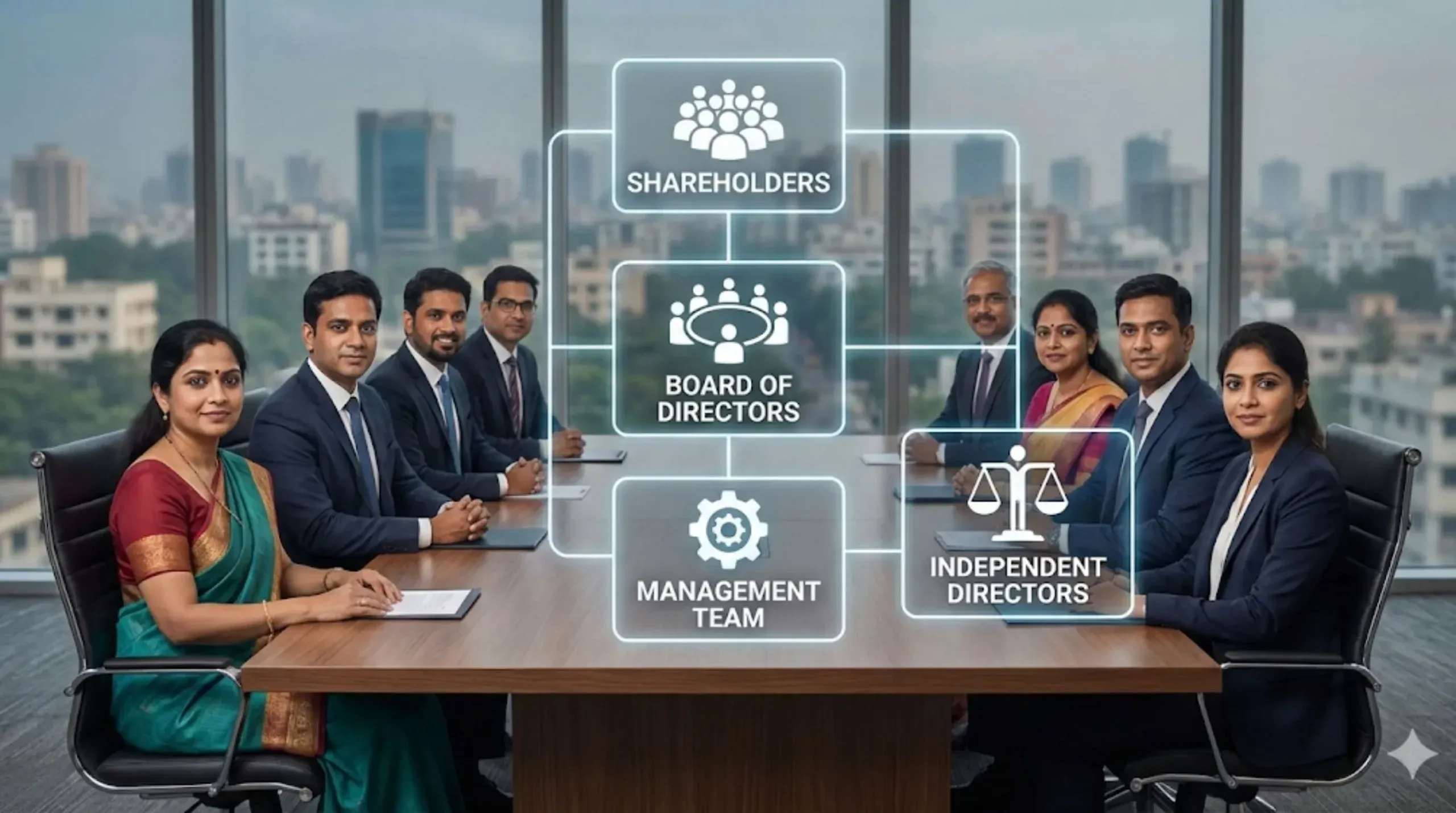
Think of a company like a democratic country. It has different branches to ensure no single person has too much power. Here are the four main groups:
1. The Shareholders (The Owners)
Who they are: These are the people who invest money in the company. In India, this includes everyone from retail investors (common people buying stocks) to big institutional investors (like LIC or Mutual Funds).
Their Role:
Electing Directors: They vote to decide who sits on the Board.
Approving Major Changes: Big decisions, like mergers or changing the company name, need their approval.
Expecting Returns: They don't run the daily show, but they expect the company to grow ethically.
2. The Board of Directors (The Brain)
Who they are: This is the most critical part of Corporate Governance Structures. The Board is elected by shareholders to represent their interests. In India, SEBI (the regulator) insists that boards must have a mix of Executive and Non-Executive directors.
Their Responsibilities:
Setting Strategy: They decide the long-term vision (e.g., "We want to capture 50% of the market in 5 years").
Hiring the CEO: They appoint the top management.
Risk Management: They ensure the company isn't taking dangerous gambles.
Oversight: They act as the "check" on the management team.
http://googleusercontent.com/image_generation_content/0
3. The Management Team (The Hands)
Who they are: This includes the C-Suite: the CEO (Chief Executive Officer), CFO (Chief Financial Officer), and COO.
Their Role:
Execution: The Board says "Go West," and the Management figures out how to get there.
Daily Operations: They run the day-to-day business (sales, marketing, production).
Reporting: They must provide honest reports to the Board. If they hide facts, governance fails.
4. Independent Directors (The Umpires)
Who they are: In the Indian context, these people are very important. They are directors who have no personal or monetary connection to the company promoters.
Their Role:
Unbiased Judgment: They protect the interests of minority shareholders (small investors).
Conflict Resolution: If the promoters want to do something that benefits them personally but hurts the company (like the RPT issues mentioned in our Kaynes Technology article), the Independent Directors are supposed to say "Stop."
Common Governance Pitfalls in India
Even with these structures, things can go wrong. Often, the lines blur. Promoters might treat the company like a personal piggy bank, or Independent Directors might remain silent friends of the owner.
Lack of Diversity: A board full of "Yes Men" is useless.
Ignoring Stakeholders: Governance isn't just about profit; it's about people. Ignoring workers can lead to disasters (read about the Maruti Suzuki tragedy to see why this matters).
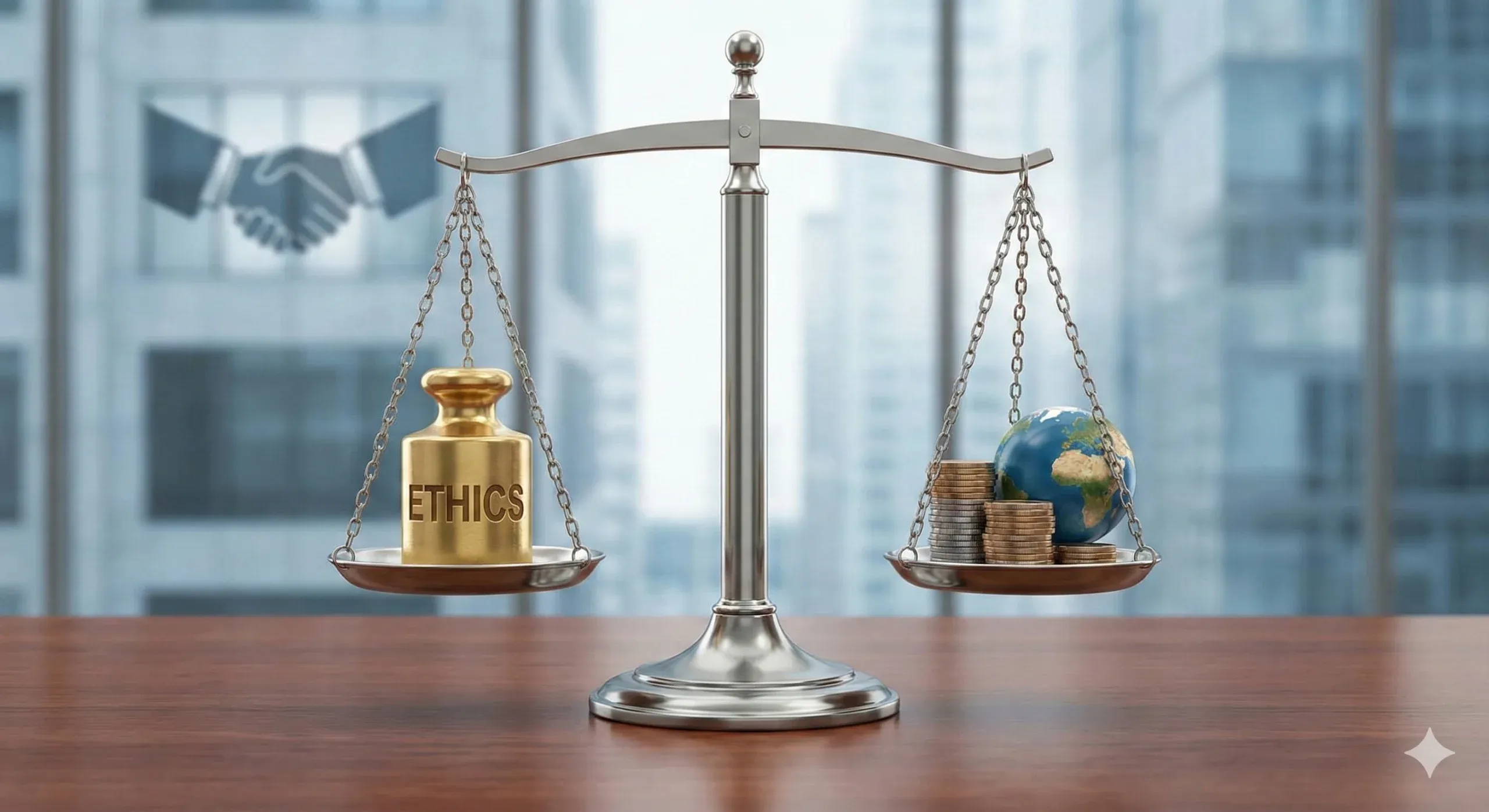
Forgetting Ethics: A structure without morals is just a skeleton. (Learn more in our guide on Why Ethical Behavior is Essential).
Conclusion
To wrap it up, Corporate Governance Structures are not just legal formalities. They are the safety nets that keep a company from falling.
Shareholders provide the fuel (capital).
The Board steers the ship (strategy).
Management runs the engine (execution).
Independent Directors keep a watch on the weather (compliance).
When all these parts work together with honesty, an Indian company can become a global giant.
Resources for Further Reading
Governance Failure Case Study: Kaynes Technologies Crisis
Labor & Ethics: Maruti Suzuki Manesar Violence
Sustainability: What are ESG Principles?