
Introduction
In today's complex business environment, corporate governance issues can make or break an organization. Effective governance is the bedrock of trust between a company and its stakeholders. Without it, companies face reputational damage, financial loss, and operational failure.
However, even well-intentioned organizations struggle. From ambiguous roles to the complexities of ESG, the challenges are numerous. This article outlines ten critical corporate governance issues and provides practical solutions to ensure your organization remains robust and ethically sound.
1. Ambiguous Board Roles
One of the most frequent corporate governance issues is a lack of clarity regarding who does what. When strategic roles are ill-defined, it leads to friction and accountability gaps.
The Issue: Directors and management often step on each other's toes, leading to inefficiency.
The Solution: Establish a clear charter that delineates the specific duties of the board versus the executive team.
Read more on this: The Corporate Governance Blueprint: Defining Strategic Roles
2. Lack of Board Diversity
Homogenous boards are prone to "groupthink," where similar backgrounds lead to similar blind spots. This limits innovation and risk detection.
The Issue: Boards composed of individuals with the same background often fail to anticipate market shifts.
The Solution: Actively recruit members from different genders, ethnicities, and disciplines to bring varied perspectives.
Read more on this: Building a Diverse Board: Key Considerations for Modern Companies
3. Ineffective ESG Compliance
Environmental, Social, and Governance (ESG) criteria are central to investor decision-making. Failing here is one of the growing corporate governance issues of our time.
The Issue: Treating ESG as a marketing exercise rather than a strategic imperative leads to "greenwashing" accusations.
The Solution: Integrate ESG metrics directly into operational KPIs and learn from past environmental crises.
Read more on this: ESG Compliance: 3 Critical Lessons From the Aravalli Crisis
4. Ethical Lapses and Culture
A toxic culture where results are prioritized over ethics is a ticking time bomb. Leadership must set the tone from the top. As Uday Kotak, a leading voice in corporate governance, famously noted:
The Issue: Leadership turning a blind eye to unethical behavior erodes the moral fabric of the company.
The Solution: Embed ethical guidelines into every level of the organization. Ethics must be non-negotiable.
Read more on this: Why Ethical Behaviour in Business is Essential
5. Poor Crisis Management
Crises are inevitable, but the inability to manage them is a major governance failure.
The Issue: Lacking a dedicated crisis response framework leads to chaotic reactions when trouble strikes.
The Solution: Regularly simulate crisis scenarios and review case studies of past failures.
Read more on this: Kaynes Technologies Crisis: Corporate Governance Lessons
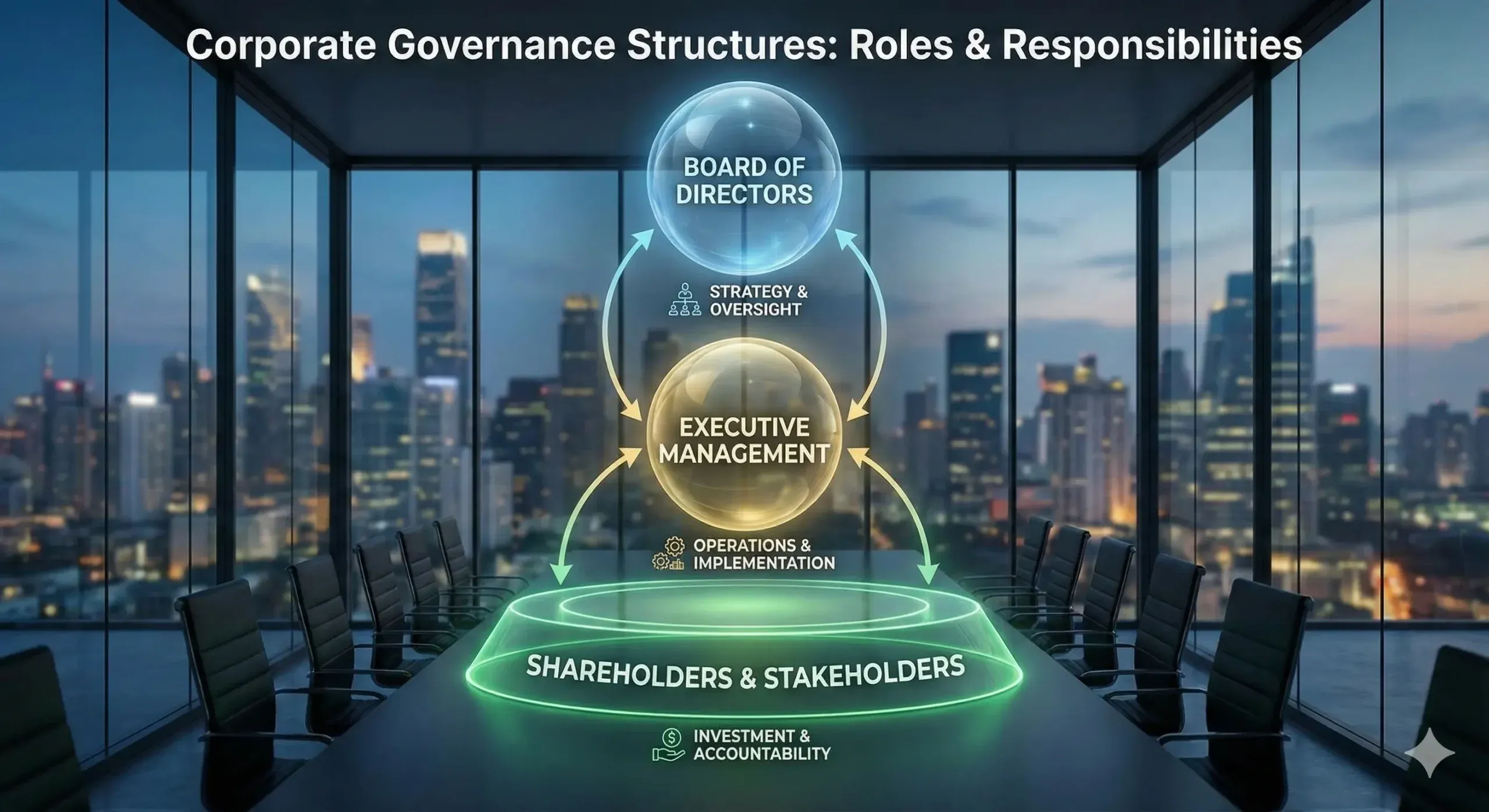
6. Structural Weaknesses
A weak governance structure cannot support the weight of a growing organization.
The Issue: Outdated reporting lines and committees that lack authority prevent proper oversight.
The Solution: Modernize your governance structures and ensure committees like Audit and Risk have real independence.
Read more on this: Corporate Governance Structures: Roles & Responsibilities
7. Neglecting Stakeholder Relations
Governance isn't just about shareholders; it’s about how you treat the workforce. Neglect here causes severe corporate governance issues.
The Issue: Ignoring employee grievances can lead to violence, strikes, and tragic loss of life.
The Solution: Establish transparent communication channels and prioritize fair labor practices.
Read more on this: Maruti Suzuki Manesar Violence: Anatomy of a Corporate Tragedy
8. Conflicts of Interest
When board members prioritize personal gain over company welfare, the organization suffers.
The Issue: Undisclosed relationships or self-dealing transactions that bleed company resources.
The Solution: Implement a rigorous policy that requires annual disclosures and recusal from voting on related matters.
9. Executive Compensation Misalignment
High pay without performance links is a major source of shareholder dissatisfaction.
The Issue: C-suite executives receiving massive bonuses while the company underperforms.
The Solution: Tie executive compensation strictly to long-term performance metrics, including ESG goals.
10. Cyber Security Oversight
In the digital age, data governance is corporate governance.
The Issue: Boards often lack the technical expertise to understand cyber risks.
The Solution: Appoint a board member with cybersecurity expertise or create a dedicated technology risk committee.
Conclusion
Addressing these common corporate governance issues requires a proactive mindset. It involves more than just compliance; it requires a genuine commitment to ethical leadership. By leveraging the insights from the resources linked above, your organization can build a framework that drives sustainable success.